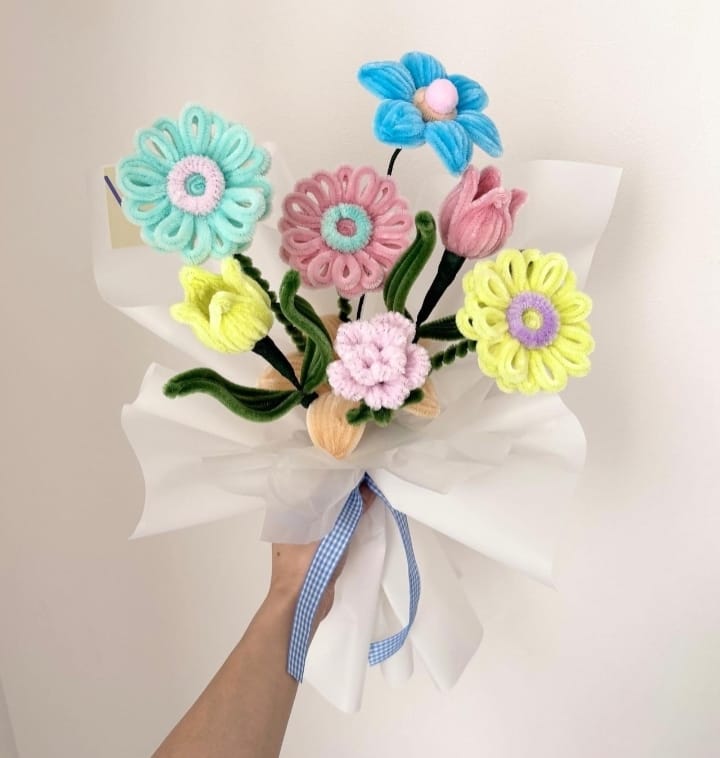
Have you ever looked at a colorful pipe cleaner and thought it could become something more than just a craft material? With a little creativity, those simple, fuzzy wires can be turned into beautiful flowers that look surprisingly charming. These are called pipe cleaner flowers, and they have become a fun and creative way to make flowers that last much longer than fresh ones.
Pipe cleaner flowers are handmade flowers made by bending, twisting, and shaping pipe cleaners into petals, leaves, stems, and flower centers. They can be made in almost any color and size, which makes them perfect for bouquets, home decoration, gifts, school projects, and DIY crafts.
What makes them special is the fact that they are handmade. Every flower can be slightly different, and you can change the colors and design according to your own taste. You don’t need expensive equipment or professional crafting skills to get started either. A few pipe cleaners, a pair of scissors, and some imagination are often enough.
What are pipe cleaner flowers?
Pipe cleaner flowers are artificial flowers created using pipe cleaners, which are also commonly called chenille stems. A typical pipe cleaner has a thin, flexible wire inside and soft, fuzzy fibers around it. This makes it very easy to bend into different shapes.
When making a flower, the pipe cleaner can be folded into loops to create petals, twisted to make the center, or wrapped around itself to form a stem. Green pipe cleaners are often used for leaves and stems, while brighter colors are used for the petals. The fun part is that there isn’t just one way to make a pipe cleaner flower. You can make a simple flower with five or six petals, or spend more time creating a detailed rose with several layers of petals.
You can even make flowers that don’t look exactly like real flowers. Maybe you want a purple sunflower, a blue rose, or a rainbow-colored bouquet. Since you’re making the flowers yourself, there really aren’t many rules.
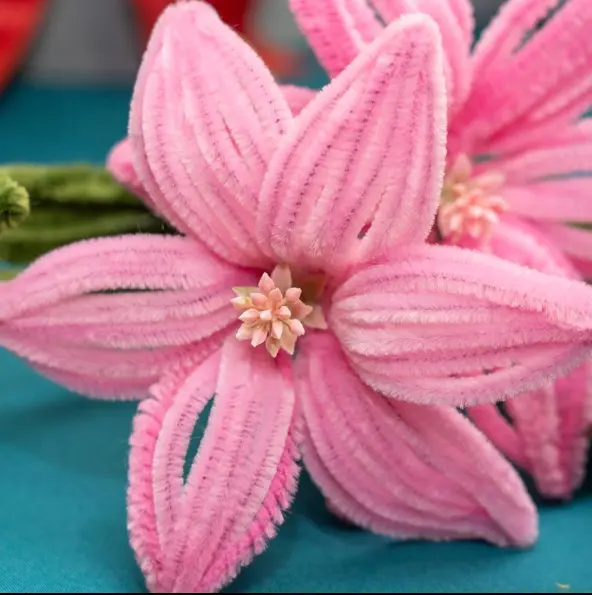
Why Are Pipe Cleaner Flowers So Popular?
There are plenty of reasons why people have started experimenting with pipe cleaner flowers. For starters, they’re easy to make. You don’t need to be an expert at crafting before you can create something pretty. Even if your first flower doesn’t look perfect, you can usually bend the petals and try again.
They’re also inexpensive. Pipe cleaners are widely available in craft stores and online, and you can buy them in packs containing lots of different colors.
Another big reason is that these flowers don’t wilt. Fresh flowers are beautiful, but after a few days they start losing their freshness. A pipe cleaner bouquet, on the other hand, can sit on a shelf or desk for months without needing water. Then there’s the personal touch. A handmade flower feels different from something picked up from a regular store. You can make it specifically for someone, choose their favorite colors, and create a bouquet that has some meaning behind it.
Social media has also played a role in their popularity. DIY flower-making videos and craft tutorials make the process look fun and achievable, which encourages people to try it themselves.
What Do You Need to Make Pipe Cleaner Flowers?
One of the nicest things about this craft is that you don’t need a huge collection of supplies.
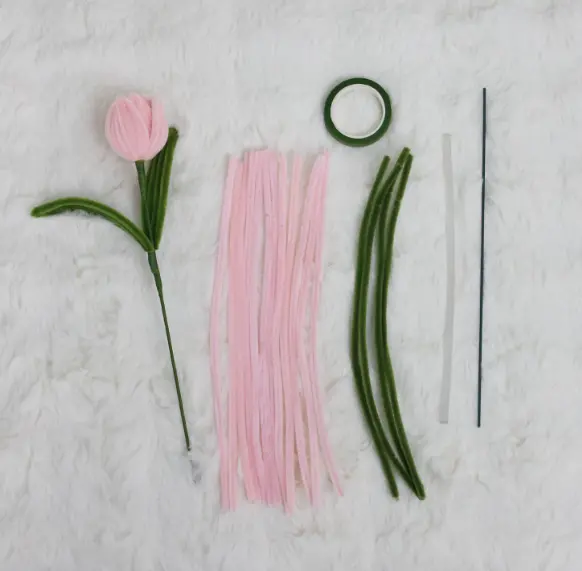
For a basic pipe cleaner flower, you may need:
- Pipe cleaners in the colors you want
- Green pipe cleaners for stems and leaves
- Scissors
- Floral tape, if needed
- Glue for certain designs
- Beads, buttons, or small decorations for the center
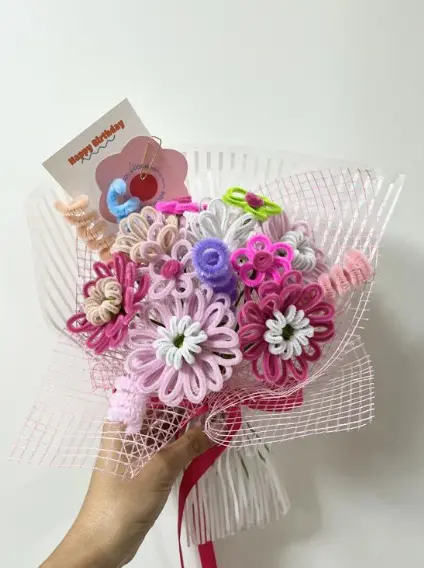
- Ribbon or wrapping paper if you’re making a bouquet
That’s pretty much it.
Of course, the materials can change depending on the flower you’re making. A simple daisy may only need a few pipe cleaners, while a more detailed rose might require several pieces and some additional decorations. If you’re just starting out, it’s better not to buy everything at once. Pick a few colors, try making some simple flowers, and see what kind of designs you enjoy.
How Are Pipe Cleaner Flowers Made?
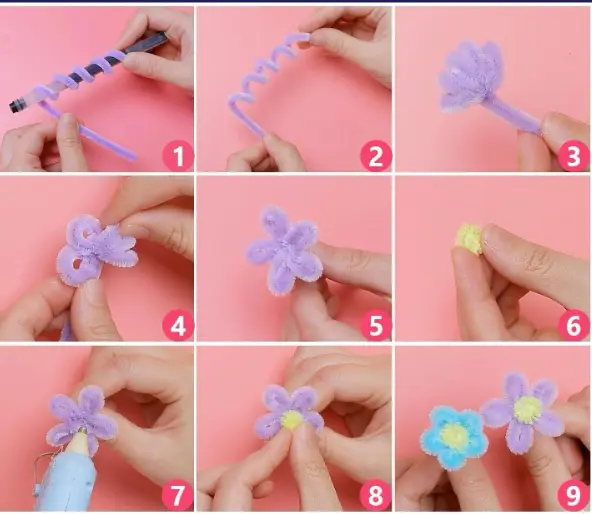
The basic idea is quite simple. First, you choose the color of your petals. The pipe cleaner is then bent into small loops or petal shapes. Several petals are brought together around the center of the flower and twisted or secured so that they stay in place.
Once the flower head is ready, another pipe cleaner can be attached underneath it to create the stem. A green pipe cleaner can also be shaped into one or two leaves and wrapped around the stem. Finally, you can adjust each petal with your fingers until the flower looks the way you want.
The first few attempts might not look exactly like the flower you had imagined. That’s completely normal. The more you practice, the easier it becomes to control the shape and size of the petals. And honestly, that’s part of the fun. Handmade flowers don’t have to be perfectly identical. The little differences are what make them feel handmade.
Different Types of Pipe Cleaner Flowers You Can Make
Pipe Cleaner Roses
Roses are probably one of the most popular choices for handmade pipe cleaner bouquets.
To create a rose, the pipe cleaner is usually curled and layered to create the appearance of overlapping petals. You can use red or pink for a classic rose, or experiment with colors like purple, white, peach, or even blue. A bunch of pipe cleaner roses wrapped together can make a lovely handmade bouquet for someone special.
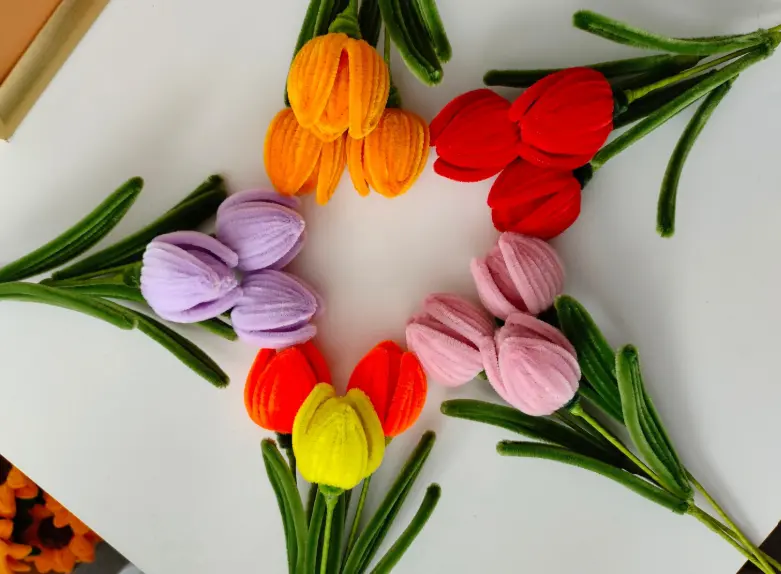
Pipe Cleaner Tulips
Tulips have a fairly simple shape, so they’re a great choice if you’re new to pipe cleaner crafts.
You can create curved petals and bring them together at the top of a green stem. Making several tulips in different colors can give you a bright and cheerful arrangement. Pink, yellow, red, orange, purple, and white tulips can all look beautiful together.
Pipe Cleaner Daisies
Daisies are another easy option for beginners.
You can make several simple white petals and attach them around a yellow center. If you want something a little different, try using colorful petals instead. A small group of pipe cleaner daisies can look cute in a tiny handmade vase or decorative pot.
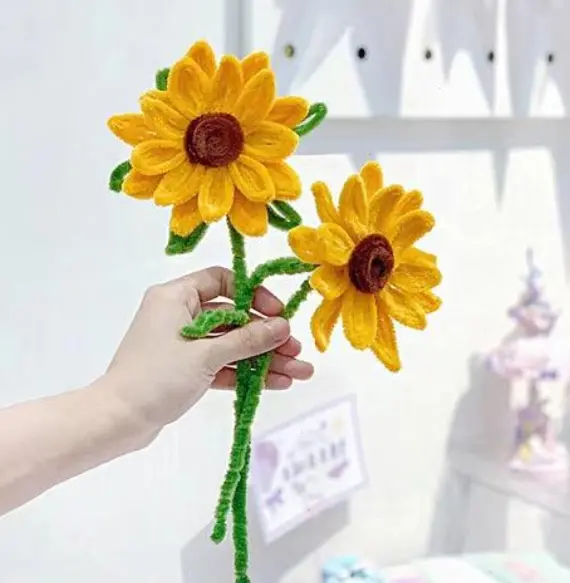
Pipe Cleaner Sunflowers
If you love bright and cheerful flowers, sunflowers are a fun design to try.
You can use yellow pipe cleaners for the petals and brown ones for the center. The petals can be arranged around the darker center to create the familiar sunflower shape. A few handmade sunflowers can make a colorful decoration for a room or a larger mixed bouquet.
Pipe Cleaner Lavender
Lavender flowers have a completely different look from roses and daisies.
Purple pipe cleaners can be shaped into small flower clusters and attached along a green stem. When several stems are grouped together, they can create a simple lavender bunch. These can look particularly nice in small decorative arrangements.
Are Pipe Cleaner Flowers Eco-Friendly?
Pipe cleaner flowers can be kept for a long time, which means they don’t need to be replaced as often as short-lived decorative flowers. They can also be reused as home décor or kept as a memory.
However, most traditional pipe cleaners contain synthetic fibers and a wire core, so they shouldn’t automatically be called completely eco-friendly.
If sustainability is important to you, you can focus on reducing unnecessary packaging, reusing materials when possible, and choosing packaging that creates less waste. Being honest about the materials you use is always better than simply calling a product “eco-friendly” without explaining why.
How to Keep Your Pipe Cleaner Flowers Looking Good
One of the easiest things about pipe cleaner flowers is that they don’t require much care. They don’t need water or sunlight, but they can collect dust over time. A soft brush or gentle air can be used to remove dust. If a petal gets bent, you can usually reshape it carefully with your fingers.
Try not to keep the flowers in places where they will constantly be crushed or handled. If you’re storing them for a long time, keep them somewhere dry and clean. If you’re sending a handmade bouquet to someone, good packaging is also important. The flowers should have enough protection so that the petals and stems don’t get bent during transportation.
Tips for Making Beautiful Pipe Cleaner Flowers
Start with a simple design and get comfortable with bending and twisting the material. Pay attention to the size of your petals. If the petals are all different sizes, the flower can look uneven. Of course, some variation is completely fine, especially if you want a natural handmade look. Try experimenting with colors too. You don’t always have to copy the colors of real flowers. A purple rose, blue daisy, or rainbow bouquet can be just as fun as a traditional arrangement.
Another useful trick is layering. Adding several layers of petals can make a flower look fuller and more detailed. Most importantly, experiment. The more flowers you make, the easier it becomes to understand how the pipe cleaner behaves.
Conclusion
Simply put, they are handmade flowers created by turning flexible pipe cleaners into petals, stems, leaves, and flower centers. But they’re more than just a simple craft project. They’re a way to create something colorful, personal, and long-lasting.
You can make a small flower for your desk, a colorful bouquet for your home, or a personalized arrangement for someone you care about. You can follow the colors and shapes of real flowers or completely let your imagination take over. That’s probably the best thing about pipe cleaner flowers: there’s no single right way to make them.
Whether you’re a beginner trying a new DIY project, someone searching for a unique handmade gift, or a small business creating personalized floral arrangements, pipe cleaner flowers give you plenty of room to experiment.
With just a few simple materials and a little patience, an ordinary pipe cleaner can become a flower that stays beautiful far longer than a fresh bouquet. And because it was made by hand, it can carry something that store-bought flowers often can’t—a little bit of the creator’s time, effort, and personality.